
Anti-Wrinkle Injections vs Dermal Fillers: What's Actually the Difference?
5 min read · Updated 26 Jun 2026
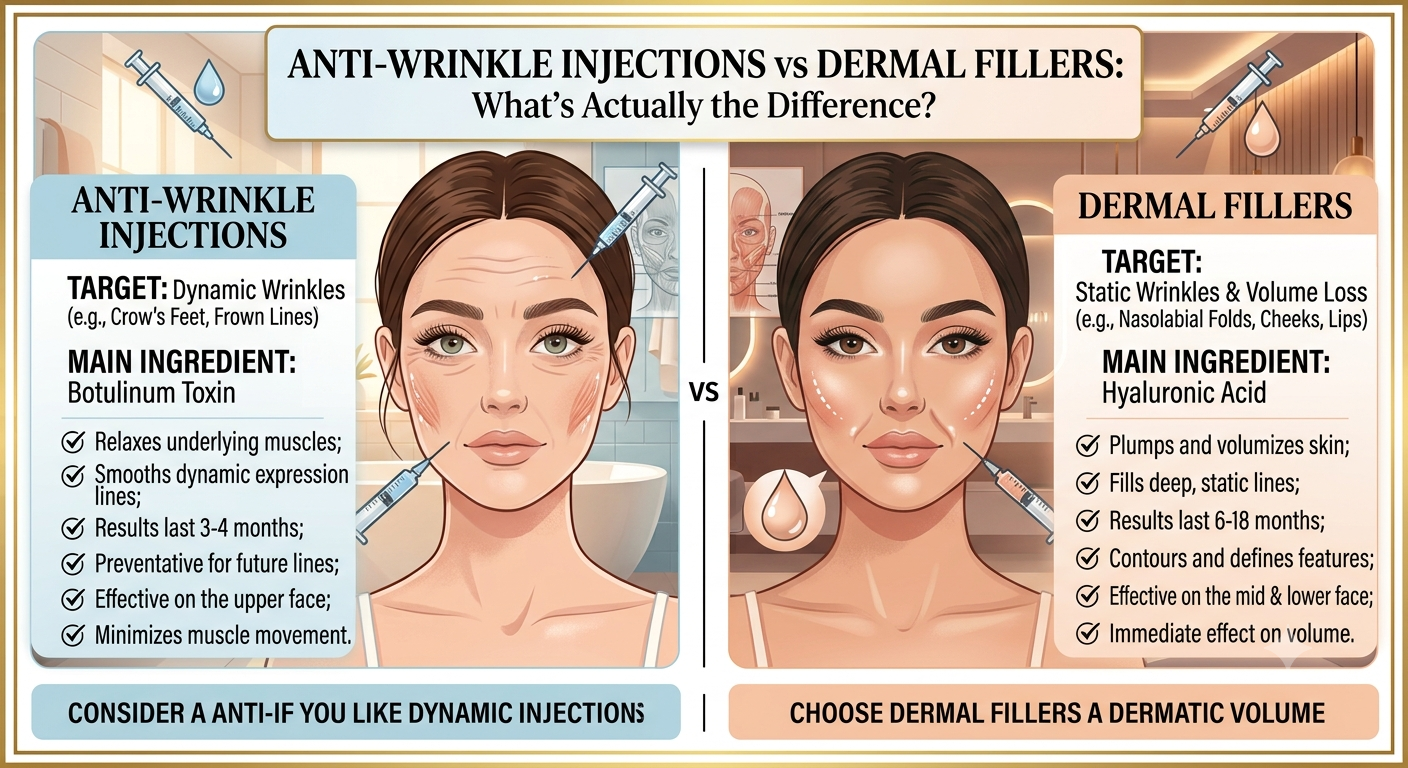
"I want a bit of Botox" is one of those phrases that's become shorthand for almost any injectable treatment, when in reality it might mean anti-wrinkle injections, dermal filler, or sometimes both. The two get used interchangeably in everyday conversation, but they're genuinely different treatments, made of different substances, targeting different kinds of lines, with different practitioners often specialising in one or the other. Worth untangling before you book a consultation.
Why you'll rarely hear "Botox" at a UK clinic
First, a quick bit of UK-specific context that trips a lot of people up: Botox is a brand name, not a treatment category. UK advertising regulations restrict clinics from using brand names like "Botox" in their marketing, which is why most reputable UK clinics describe the treatment as "anti-wrinkle injections" instead, even when the actual product being used might be Botox, Azzalure, Bocouture or another botulinum toxin brand. If a clinic's marketing leans heavily on the word "Botox," that's worth noting — it doesn't mean anything is wrong, but "anti-wrinkle injections" is the more precise, and more commonly used, term in UK clinical settings.
The actual mechanism: muscles vs volume
Anti-wrinkle injections use botulinum toxin to temporarily block the nerve signals that tell specific facial muscles to contract. With the muscle no longer contracting as forcefully, the skin above it stops creasing in the same way — which is why anti-wrinkle injections work specifically on what are called dynamic wrinkles, the lines that appear when you make an expression (frowning, raising your eyebrows, squinting). Forehead lines, frown lines between the brows, and crow's feet are the classic treatment areas, because all three are driven by repeated muscle movement.
Dermal fillers work completely differently — there's no effect on muscles at all. Most are made from hyaluronic acid, a substance that occurs naturally in skin and has a plumping, hydrating effect. Filler is injected to physically add volume in areas that have lost it, or to fill in static wrinkles — the lines that are visible even when your face is completely relaxed, not just when you're moving it. This is why fillers are the go-to for hollow cheeks, thinning lips, tear troughs under the eyes, and deeper, more set-in lines like marionette lines around the mouth.
Side by side
Anti-Wrinkle Injections Dermal Fillers
| Active ingredient | Botulinum toxin | Usually hyaluronic acid
| How it works | Relaxes muscles | Adds volume/fills space
| Treats | Dynamic wrinkles (from movement) | Static wrinkles, volume loss
| Common areas | Forehead, frown lines, crow's feet | Lips, cheeks, tear troughs, marionette lines
| Typical duration | 3–4 months | 6–12 months (varies by filler and area)
Can you have both? (Short answer: yes, often together)
It's genuinely common to combine the two in a single consultation, since they're solving different problems rather than competing for the same one. A typical example is treating crow's feet with anti-wrinkle injections while adding filler to hollow under-eye areas in the same appointment — the muscle-relaxing effect and the volumising effect work on entirely separate mechanisms, so there's no conflict in using both. A good practitioner will usually assess your whole face rather than treating each area in isolation, and may suggest a combination even if you only asked about one.
What it actually costs in the UK
Based on real pricing data submitted across the UK, here's where to check current rates:
- Anti-wrinkle injections (1 area): see current pricing on our 1-area price page
- Anti-wrinkle injections (3 areas): see current pricing on our 3-area price page
- Lip filler (1ml): see current pricing on our lip filler price page
- Cheek filler (1ml): see current pricing on our cheek filler price page
Pricing for both treatments varies considerably based on the practitioner's qualifications, the specific product brand used, and how many areas or millilitres are involved — our pricing calculator can help you budget for a specific combination of treatments rather than guessing from a single headline price.
What actually matters more than which treatment you choose
Whichever one you're considering, who's doing it matters more than which product they're using. In the UK, anti-wrinkle injections legally require a prescription from a qualified medical professional, and reputable practitioners for both treatments should be registered with the relevant regulatory bodies and able to clearly explain the product, dosage, and qualifications behind what they're injecting. Serious complications from either treatment are rare when administered properly, but the rare serious risks that do exist are almost always linked to unqualified or unregistered providers rather than the treatments themselves.
The bottom line
Anti-wrinkle injections relax the muscles causing expression lines; dermal fillers add volume to areas that have lost it or fill in lines that are visible even at rest. They're not competing options for the same problem — in a lot of cases, the right answer is both, targeting different areas for different reasons. A proper consultation with a qualified practitioner should clarify which (or which combination) actually addresses what you're looking to change, rather than you needing to diagnose it yourself beforehand.
Find a verified, qualified aesthetics practitioner near you in our directory, or check current UK pricing for aesthetics treatments on our Beauty Price Index.
Ready to book aesthetics?
Check typical UK prices, then find a verified local pro.