Lash Infills: How Often You Actually Need Them (and What Happens If You Skip)
4 min read · Updated 15 Sep 2026
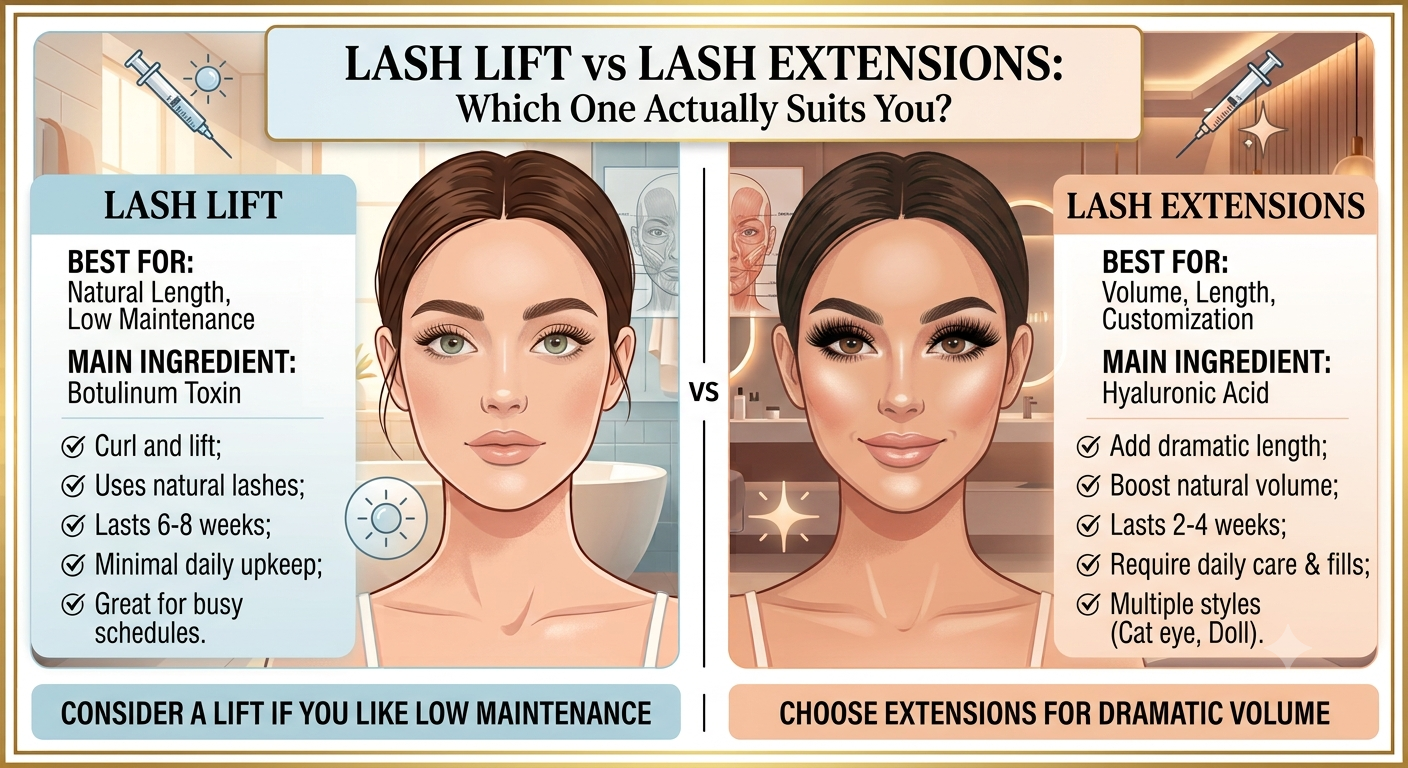
If you've ever wondered why your lash artist keeps pushing you to book an infill every couple of weeks rather than letting you stretch it out, the answer comes down to something that has nothing to do with the extensions themselves: your own natural lashes are shedding constantly, extensions or not, and infills are simply how you keep up with that.
Why infills are necessary at all
Natural lashes go through a growth cycle just like the hair on your head — they grow, rest, then shed, and a new lash grows in to replace it. This happens continuously, a few lashes at a time, regardless of whether you have extensions on or not. When a natural lash with an extension attached sheds, that extension goes with it. Multiply that across several weeks and you end up with visible gaps, even though the extensions you still have left are perfectly intact.
An infill is the appointment where your lash artist fills in those gaps — adding fresh extensions to the natural lashes that have grown in since your last visit, rather than removing and redoing the entire set.
How often do you actually need one?
Most people need an infill every 2–3 weeks. That window roughly matches the natural lash shedding cycle, which is why it's the standard recommendation across most lash studios rather than an arbitrary upsell schedule. A few things shift that window slightly:
- Your natural lash growth cycle — some people genuinely shed faster than others, which can mean needing infills slightly sooner than the standard 2–3 week guide.
- How you sleep and how often you touch your face — side sleeping and frequent rubbing both knock extensions loose faster than they'd otherwise fall out naturally.
- The set you have. Heavier volume sets can sometimes show gaps more noticeably than lighter classic sets simply because there's more product per natural lash to begin with.
What happens if you leave it longer than that
Stretching an infill out by a few days generally isn't a problem — it just means a slightly more noticeable gap by the time you go in. The issues start to show up with a more consistent pattern of leaving it 4, 5, 6+ weeks between visits:
- The infill becomes a bigger job. More natural lash growth means more new lashes need extensions added, which takes longer and can cost more than a standard infill booked on schedule.
- Remaining extensions can grow out at an awkward angle. As the natural lash grows, the extension attached to it grows with it, eventually pointing in a different direction than intended — which is part of why very overdue extensions can start looking a bit messy rather than just sparser.
- Some salons will recommend a full new set instead. Past a certain point, it's often quicker and gives a better result to remove everything and start fresh rather than infill on top of an overgrown set.
None of this means anything is being damaged by waiting slightly longer — it's more that the appointment itself becomes less efficient and the end result less neat the longer it's left.
What lash infills cost in the UK
Based on real pricing data submitted across the UK, you can check current rates on our lash infill price page. If you're trying to budget the real ongoing cost of extensions rather than just the price of your first set, our pricing calculator can help you work out a realistic monthly total once infills every 2–3 weeks are factored in — this tends to be the part people underestimate most when they first start getting extensions.
Infill or full new set: how to know which you need
As a rough guide: if it's been within your usual 2–3 week window and most of your set is still intact with just some natural gaps, an infill is exactly what's needed. If it's been significantly longer, several extensions have fallen out unevenly, or your set is looking generally tired rather than just gappy, it's worth asking your lash artist directly whether a full new set would actually serve you better — sometimes the cheaper-sounding infill ends up taking longer and looking less polished than starting fresh.
The bottom line
Lash infills aren't about the extensions wearing out — they're about keeping up with your own natural lash shedding cycle, which happens whether you have extensions or not. Booking every 2–3 weeks keeps that process manageable; leaving it considerably longer just makes each infill bigger and messier than it needs to be.
If you're still deciding between a lash lift and extensions in the first place, our guide to lash lift vs lash extensions breaks down which one actually suits your natural lashes. Find a verified lash artist near you in our directory.
Ready to book lashes?
Check typical UK prices, then find a verified local pro.