
Airbrush vs Traditional Makeup: Which Actually Lasts Longer and Looks Better in Photos?
4 min read · Updated 24 Jun 2026
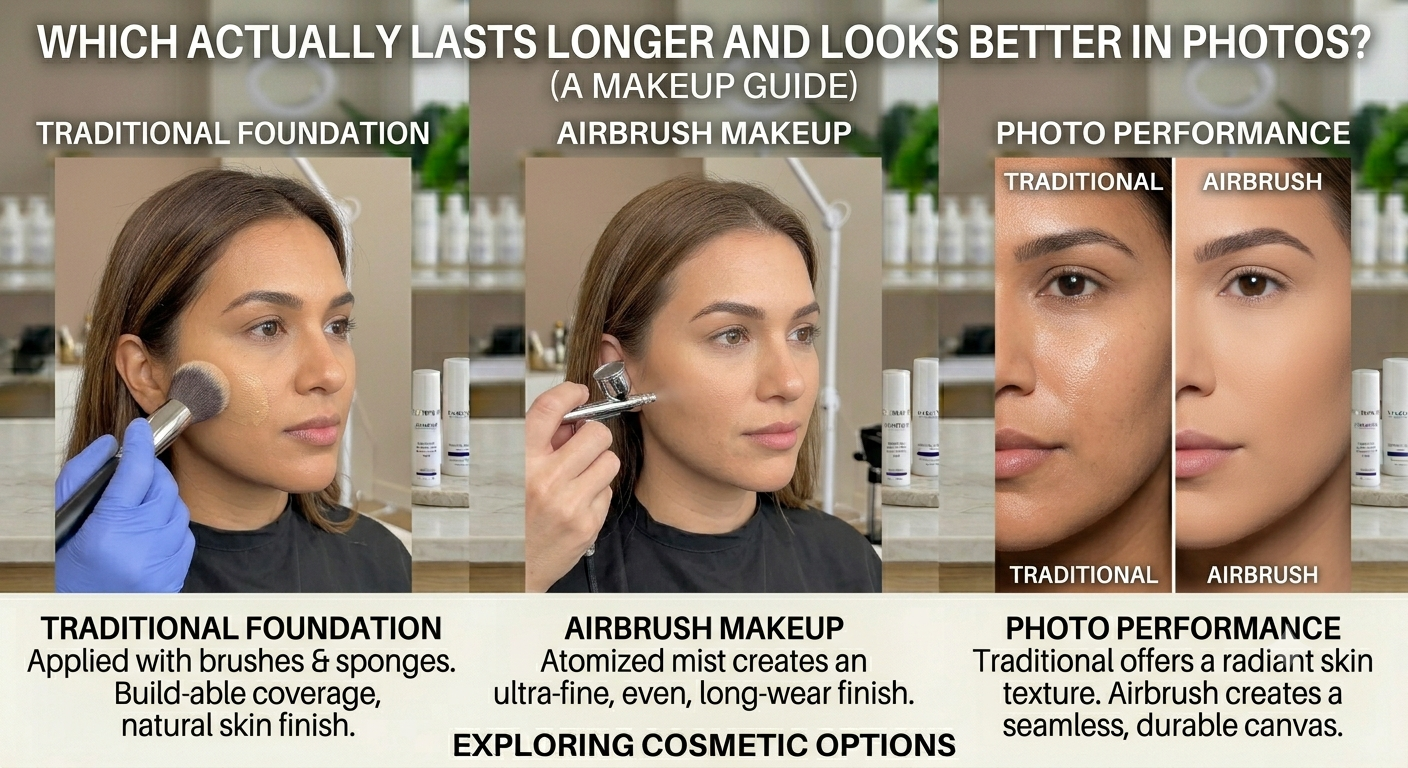
If you've searched "airbrush vs traditional makeup," you've probably noticed almost every result confidently declares airbrush the winner. It's worth knowing that a lot of those articles are written by studios that only offer airbrush — so the comparison isn't always as neutral as it looks. The honest picture is more balanced than that, and which one is actually right for you depends a lot more on your skin and the event than the marketing suggests.
What each one actually is
Traditional makeup is applied with brushes, sponges, or fingers, using liquid, cream or powder foundation. It's the method most makeup artists train on first, and it allows for direct control — building coverage exactly where it's needed, blending, contouring, and correcting in real time as the artist works.
Airbrush makeup uses a small handheld gun connected to a compressor to mist a thin layer of foundation onto the skin. The formula is usually silicone or water-based, and because it's applied as a fine spray rather than rubbed in, the finish tends to look very smooth and lightweight straight off the bat.
The longevity claim, examined properly
Airbrush is very often marketed as automatically longer-lasting, and there's a real reason for that reputation: many airbrush formulas are silicone-based, which creates a water-resistant, transfer-resistant layer on the skin. For an emotional event with crying, hugging, or heat, that can genuinely help.
But longevity isn't purely about the application method. Properly prepped skin, a good primer, and a setting spray or powder will give traditional makeup very comparable staying power for most people and most events — the "airbrush always lasts longer" claim is repeated more often than it's actually demonstrated head-to-head. Where airbrush has a clearer, less disputed advantage is in humid or hot conditions specifically, and in resisting transfer onto clothing.
Where airbrush genuinely struggles
This is the part that one-sided comparisons tend to skip over:
- It's hard to touch up once it's set. If you cry, sweat, or need a correction partway through the day, re-blending airbrush cleanly is genuinely difficult compared to traditional foundation, which can be reworked with a sponge or brush.
- It's not ideal for covering texture, blemishes, or scarring. Because it's a thin, even mist rather than a buildable product, airbrush doesn't conceal the way layered traditional foundation can. If significant coverage is the priority, traditional usually wins.
- Dry or textured skin can look worse, not better. Airbrush formulas can cling to dry or flaky patches and emphasise fine lines rather than blurring them, particularly with water-based formulas.
- Shade range is more limited. Traditional foundation comes in far more shades and formulas than most airbrush product lines, so an exact match can be harder to find.
Where airbrush genuinely shines
To be fair to it — airbrush isn't oversold on everything. It does tend to photograph particularly well under flash and in high-definition video, since the thin, even layer doesn't catch light in the same way thicker product can. It's also a sensible option for oily or combination skin, where a lightweight, often matte-leaning formula helps control shine through a long day.
So which one should you actually book?
Go with traditional if you have visible texture, scarring, or blemishes you want properly covered, you have drier skin, or you simply want a look that can be adjusted and corrected throughout a long day.
Go with airbrush if your skin is in good condition with minimal texture, you have oily or combination skin, the event is somewhere hot or humid, and you mainly want a lightweight, photo-friendly finish.
Genuinely not sure? A trial session is worth the cost, especially for something like a wedding. Try both if the artist offers it, photograph yourself under different lighting, and judge for your own skin rather than going purely on what a comparison article (including this one) tells you to expect.
The bottom line
Airbrush isn't a universal upgrade over traditional makeup, and traditional isn't outdated just because airbrush is the newer-sounding option. Each one solves different problems — airbrush for lightweight, photo-friendly, humidity-resistant finishes on good-condition skin; traditional for coverage, correction, and flexibility on textured or blemish-prone skin. The right choice depends on your specific skin and your event, not on whichever method the artist you found happens to specialise in.
Find a verified makeup artist near you in our directory, or check typical UK pricing for makeup services on our Beauty Price Index.
Ready to book makeup?
Check typical UK prices, then find a verified local pro.