Hard Wax vs Soft Wax: What's the Actual Difference (and Which Hurts Less)?
4 min read · Updated 15 Sep 2026
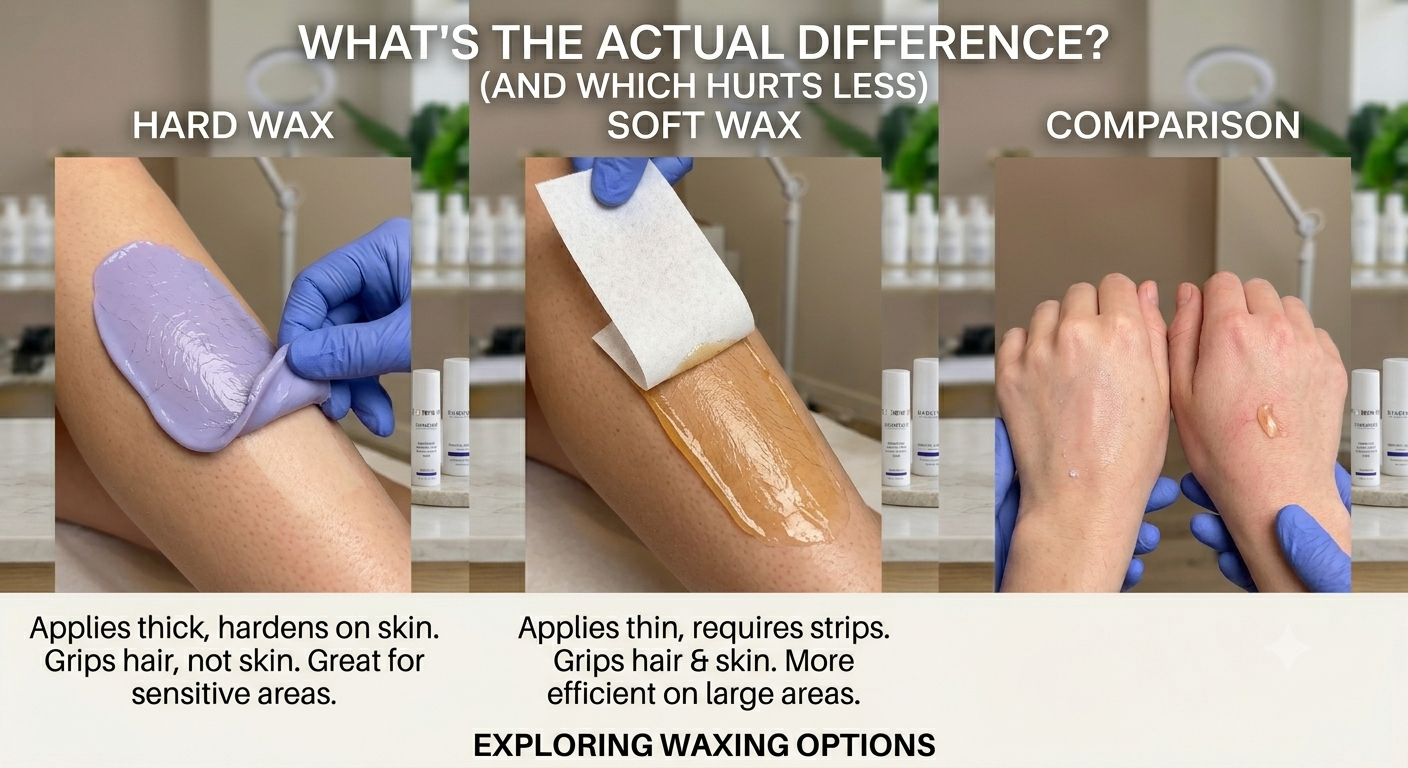
If you've ever been asked "do you want hard wax or strip wax for this?" mid-appointment and just nodded along without really knowing the difference, you're in good company. Most people book a wax based on the area or the salon rather than the wax type itself — but the type genuinely does affect how much it hurts, how well it works, and how your skin reacts afterward.
The core difference
Soft wax (also called strip wax) is spread in a thin layer directly onto the skin and removed using a cloth or paper strip. Because it's thin, it grips both the hair and the surface of the skin, which is what makes it efficient for covering large areas quickly — but also what makes it sting a bit more on removal.
Hard wax is applied thicker, hardens as it cools, and is peeled off by hand without needing a strip. Because it shrink-wraps around the hair itself rather than bonding to the skin underneath, it tends to be gentler — particularly noticeable on more sensitive areas.
Why this actually changes the experience
The skin-adhesion difference explains most of what people notice between the two:
- Soft wax pulls on the top layer of skin as well as the hair, which is part of why it gives a mild exfoliating effect, but also why it can leave more redness on sensitive skin.
- Hard wax only grips the hair, which is why it's generally the go-to for smaller, more sensitive areas — underarms, bikini line, upper lip, brows — where you want effective hair removal without dragging at the skin underneath.
- Soft wax covers ground faster, which is exactly why it's the standard choice for legs, arms and backs, where speed and coverage matter more than micro-precision.
So which one actually hurts less?
Hard wax is generally considered less painful as a rule, simply because it isn't gripping your skin on the way off. But it's worth being honest here: pain during waxing depends on more than the wax type. Hair coarseness, the specific area, where you are in your cycle if that applies to you, and — possibly most of all — the skill of the person doing it all play a real role. A confident, experienced technician using soft wax can often be more comfortable than an inexperienced one using hard wax badly. Wax type is one factor among several, not the whole story.
Which areas typically use which
Area Usually Why
| Legs, arms, back | Soft wax | Speed and coverage matter more than precision here
| Underarms | Hard wax | Sensitive skin, coarser hair, needs precision
| Bikini line / Brazilian | Hard wax | Most sensitive area, coarse hair, repeat passes possible without skin damage
| Eyebrows, upper lip | Hard wax (sometimes soft for fine hair) | Precision and minimal skin irritation on the face
None of this is a hard rule — some skilled estheticians use soft wax confidently on bikini areas, and plenty of studios use a hybrid approach within a single appointment (soft wax on the legs, switching to hard wax for the bikini line). If you have a strong preference or a sensitivity history, it's completely reasonable to ask which one they're planning to use before they start.
What actually causes ingrown hairs and irritation (it's not really about wax type)
Both wax types remove hair from the root and can lead to ingrown hairs if aftercare is skipped — this comes down far more to exfoliation habits and skin hydration afterward than which wax was used. A few things that genuinely help regardless of wax type:
- Avoid hot showers, saunas, and tight clothing over the area for the first 24–48 hours, since trapped heat against freshly waxed skin is a common cause of bumps and irritation.
- Gentle exfoliation a few days after (not immediately) helps prevent regrowing hairs from getting trapped under the skin.
- A fragrance-free, soothing product like aloe straight after your appointment calms redness faster than leaving it alone.
The bottom line
Hard wax tends to be gentler and is the better fit for small, sensitive areas; soft wax is faster and better suited to large areas where coverage matters more than precision. Beyond that, the skill of whoever's doing it and how you look after your skin afterward will affect your experience more than the wax type alone. If you're nervous about pain, it's worth simply asking your salon what they'd recommend for the specific area and your skin — a good technician will have a clear, confident answer.
Find a verified waxing specialist near you in our directory, or check typical UK pricing for waxing treatments on our Beauty Price Index.
Ready to book waxing & hair removal?
Check typical UK prices, then find a verified local pro.