☀️
Summer is here! Holiday-ready nails, lashes and glow — share your looks.
"Reef-Safe" SPF Is Everywhere This Summer — But the Label Means Less Than You Think
 Roylina Team
Silver · 2,348 lifetime points
Verified UK Pro — qualified & insured
Premium Lovers account
Premium Gold account
2 hours ago
6
4 min
Roylina Team
Silver · 2,348 lifetime points
Verified UK Pro — qualified & insured
Premium Lovers account
Premium Gold account
2 hours ago
6
4 min
Ads



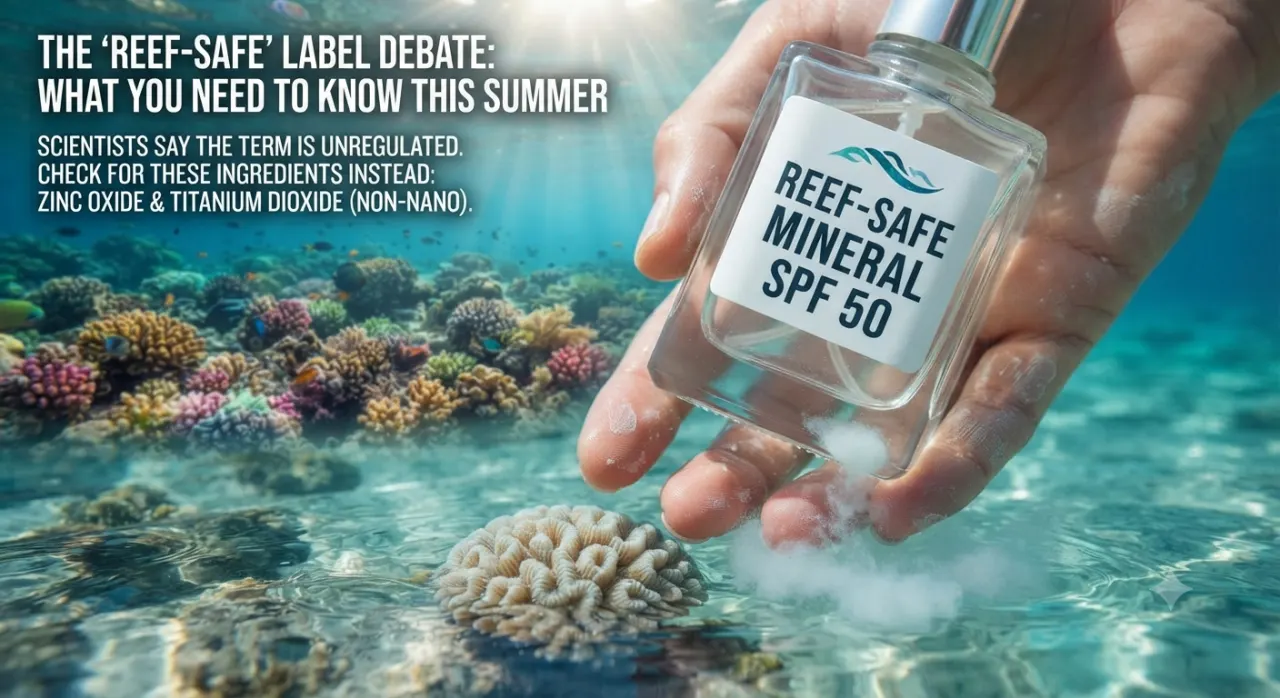
If you're packing for a beach holiday this summer, there's a decent chance you've come across "reef-safe" sunscreen — the label is suddenly everywhere, searches for it have surged this year, and a growing list of destinations have outright banned regular SPF formulas. But here's the part the front of the bottle won't tell you: "reef-safe" isn't a legally regulated term. Any brand can print it. So it's worth knowing how to check for yourself — it takes about ten seconds once you know what to look for.
Why this became a thing
The numbers behind the trend are genuinely startling: an estimated 20,000 tonnes of sunscreen wash into the northern Mediterranean alone every year. Research has linked certain chemical UV filters — most notably oxybenzone and octinoxate — to coral bleaching and stress, which is why a string of destinations have banned sunscreens containing them: Hawaii (the first, back in 2018), Palau, parts of Thailand, the Maldives, Bonaire, Aruba and more. If you're travelling to one of these places, this isn't just an ethics question — your usual SPF may literally not be allowed in.
The ten-second label check
Flip the bottle and read the active ingredients. The main names to avoid, according to marine conservation experts: oxybenzone (sometimes listed as benzophenone-3), octinoxate, and octocrylene. What you want to see instead: non-nano zinc oxide or titanium dioxide — mineral filters that sit on the skin and reflect UV rather than dissolving into it.
One genuinely useful nuance that catches people out: if you spot "hydroxybenzoyl" buried in a long ingredient name (like diethylamino hydroxybenzoyl hexyl benzoate), that's not oxybenzone — it's a newer-generation UVA filter widely used in European sunscreens and currently considered a much lower concern for marine life. Don't panic-bin a perfectly good SPF over a partial name match.
Does mineral SPF actually protect as well?
Yes — mineral filters provide broad-spectrum UVA and UVB protection and are just as effective when applied properly. The honest trade-offs are cosmetic: mineral formulas have historically left more white cast (dramatically improved in newer formulations, though worth checking reviews for deeper skin tones), and chemical formulas find it easier to hit very high SPF numbers. For beach days, SPF 30–50 mineral with good water resistance covers what most people need.
Three habits that matter as much as the ingredients
- Lotion over spray. A large share of spray sunscreen never lands on you — it lands on the sand and washes straight into the water. Rub-on formats waste far less.
- Apply 15–20 minutes before swimming and follow the water-resistance timings on the label ("waterproof" doesn't exist — it's 40 or 80 minutes of water resistance, then reapply).
- Cover up where you can. A UPF rash vest for snorkelling means less product on your skin and less in the sea — the most reef-safe sunscreen is the sunscreen you didn't need to apply.
The greenwashing warning
Because the term is unregulated, some heavily marketed "ocean-friendly" products still contain the very filters that conservation bodies flag. The only reliable move is the ingredient check above — the front label is marketing, the back label is fact. A bonus signal worth looking for on UK shelves: some brands partner directly with marine organisations like the Marine Conservation Society and carry the affiliation on the pack, which at least means someone independent is looking over their shoulder.
The bottom line
You don't need to spend more or protect your skin less to make a better choice here — reef-safer mineral options now exist at every price point, including under £10 on the high street. Check the back of the bottle for oxybenzone, octinoxate and octocrylene, favour lotions over sprays, and if your holiday destination has an SPF ban, sort it before you fly rather than paying resort-shop prices for the compliant stuff on arrival.
Planning pre-holiday treatments too? Check our guides to Hollywood vs Brazilian waxing and browse verified professionals in our directory.
Choice Community
0 Comments
Join the conversation.
Log in to comment
No comments yet. Be the first to share your thoughts.
More from General Chat
Ads