Ads
"HEMA-Free" Is Everywhere Right Now — and It Doesn't Mean What Most People Think
 Roylina Team
Gold · 4,314 lifetime points
Verified UK Pro — qualified & insured
Premium Lovers account
Premium Gold account
2 months ago
190
5 min
Also Read:
Added up what I spend on beauty in a year and I've been sat here in silence for ten minutes
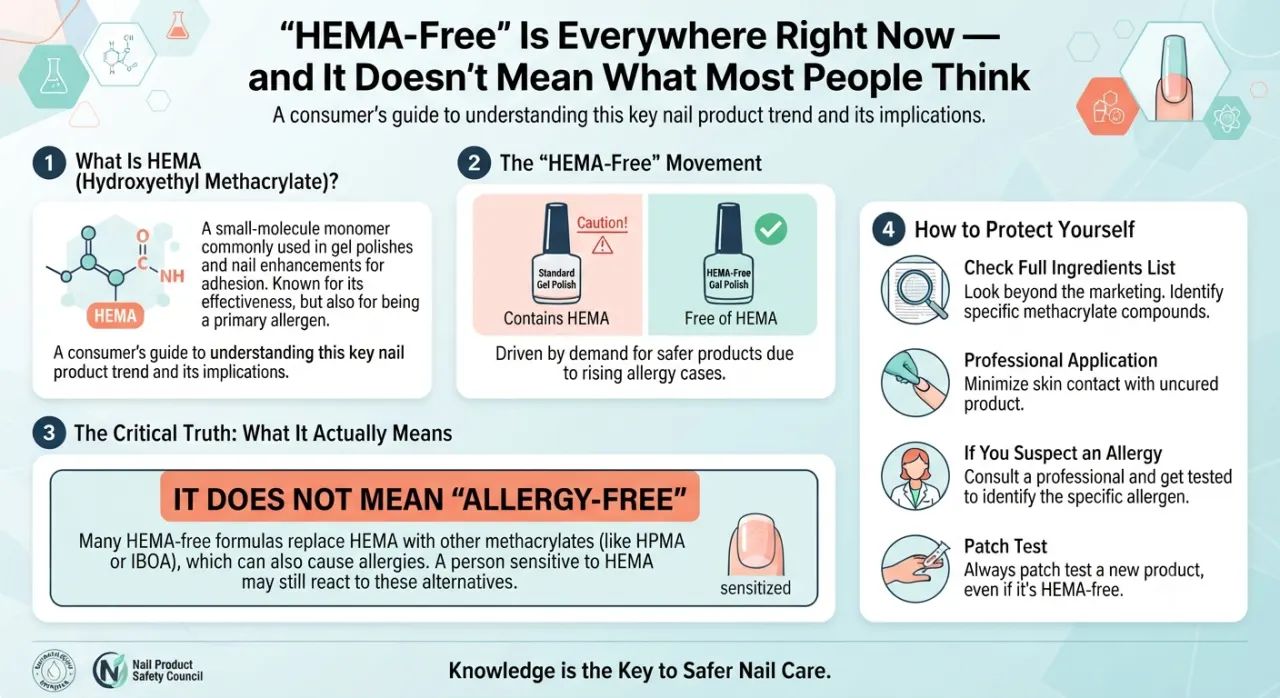
Scroll any nail supplier's site right now and "HEMA-free" is the badge on everything. There's a real reason for it — acrylate allergy from gel products is genuinely rising, and HEMA is the main cause. But almost everything written about it is published by companies selling HEMA-free products, which means one important caveat rarely makes the page. So here's the neutral version, including the symptom that gets misdiagnosed most often.
What HEMA is and why it's in almost everything
HEMA (2-hydroxyethyl methacrylate) is a small monomer that's been standard in gel formulas for decades. It's there because it works: the molecule penetrates slightly into the nail plate surface and cross-links during the lamp cure, creating a chemical bond that makes gel adhere properly and wear well.
That same small size is the problem. Being small enough to bond into the nail also makes it small enough to penetrate skin — and repeated skin exposure is how contact allergy develops.
The three things worth actually knowing
1. You can develop it after years of no problems. This is the one people find hardest to accept. Contact allergy works by sensitisation — your immune system needs repeated exposure before it starts reacting. Nail technicians commonly report onset after 2–5 years of working. Being fine so far doesn't mean you're immune; it means your threshold hasn't been reached yet.
2. Once sensitised, it's permanent. There's no desensitisation treatment. This isn't something you manage and grow out of — it's a line you cross once. And it extends beyond nails: acrylates appear in dental bonding, medical adhesives and some contact lens solutions, so a nail-acquired allergy can complicate a dentist appointment years later.
3. The rash often isn't on your hands. This is the genuinely useful bit. Nail acrylate allergy frequently shows up as dermatitis on the face, eyelids and neck — areas you touch with your fingers — rather than around the nails. It's called ectopic contact dermatitis, and because nobody connects an eyelid rash to a manicure, it's regularly misdiagnosed as something else entirely. If you've had persistent unexplained facial or eyelid dermatitis and you wear gels, that connection is worth raising with a GP or dermatologist.
The bit the marketing leaves out
Here's where the "HEMA-free" badge needs context. HEMA-free means the formulation doesn't intentionally include HEMA as a listed ingredient. It does not mean the product is allergen-free.
Most HEMA-free gels replace HEMA with larger molecules like Di-HEMA TMHDC or other urethane methacrylates. Those are genuinely less likely to penetrate skin — a real improvement — but they're still reactive monomers capable of causing sensitisation. Around 10–15% of people already allergic to HEMA also react to the alternatives.
There's a purity issue too. A 2023 Finnish study analysing nail products by GC-MS found that cheap or poorly purified raw materials can contain residual HEMA and other sensitisers as contaminants — including in products not listing them. Ingredient quality varies enormously between brands, and the label only tells you what was intentionally added.
None of which makes HEMA-free pointless. If you're already sensitised, switching is essential. If you're not, it meaningfully reduces risk. It just isn't the guarantee the badge implies.
If you're a client
- Watch for itchy cuticles. That's the classic early presentation — persistent itching around the nail beds a day or so after an appointment, sometimes with redness and dryness that develops into a rash.
- Product should never touch your skin. Uncured gel flooding the cuticle is the main exposure route in a salon. A tech who keeps product off the skin is reducing your risk, not just being neat.
- Under-cured gel is a bigger risk than the ingredient list. Weak or old lamps, or lamps mismatched to the product, leave uncured monomer sitting against your nail. This is one reason bargain services carry real risk beyond a poor finish.
- If you react, say so and get assessed. Don't just switch salons — a dermatologist can patch test and tell you what you're actually reacting to, which matters for dental work later.
If you're a tech
Occupational exposure is significantly higher than client exposure — daily contact with uncured product, brush handles, and filing dust from cured gel, which also carries allergens. The professional consensus is straightforward: nitrile gloves (changed regularly), good ventilation and dust extraction, no skin contact with uncured product, correctly matched and maintained lamps, and taking early symptoms seriously rather than working through them. "I've been fine for years" is, unfortunately, exactly what people say shortly before they aren't.
The bigger picture in 2026
This sits alongside the other ingredient change happening right now — the TPO ban taking effect on 15 August. They're separate issues: TPO is a regulatory reclassification with fixed dates, HEMA is an allergen with no ban attached. Both are pushing the same direction though — reformulation, and clients asking more questions about what's in the bottle. That's a good development, provided the answers stay honest.
The bottom line
HEMA is the leading cause of gel and acrylic allergy, the allergy is permanent once developed, and it frequently shows up on your face rather than your hands. HEMA-free products genuinely lower risk and are essential if you're already sensitised — but they're a reduction, not an immunity. The things that actually protect you are the unglamorous ones: no product on skin, properly cured gel, decent quality products, and taking itchy cuticles seriously the first time.
Learn more about builder gel in our guide to what BIAB actually is, or find a verified nail tech near you in our directory.
Choice Community
0 Comments
Join the conversation.
Log in to comment
No comments yet. Be the first to share your thoughts.