
Ads
☀️
Summer is here! Holiday-ready nails, lashes and glow — share your looks.
Why Every UK Salon Suddenly Wants a Deposit — and What's Actually Fair (For Both Sides)
 Roylina Team
Gold · 2,868 lifetime points
Verified UK Pro — qualified & insured
Premium Lovers account
Premium Gold account
3 hours ago
8
4 min
Roylina Team
Gold · 2,868 lifetime points
Verified UK Pro — qualified & insured
Premium Lovers account
Premium Gold account
3 hours ago
8
4 min
Ads
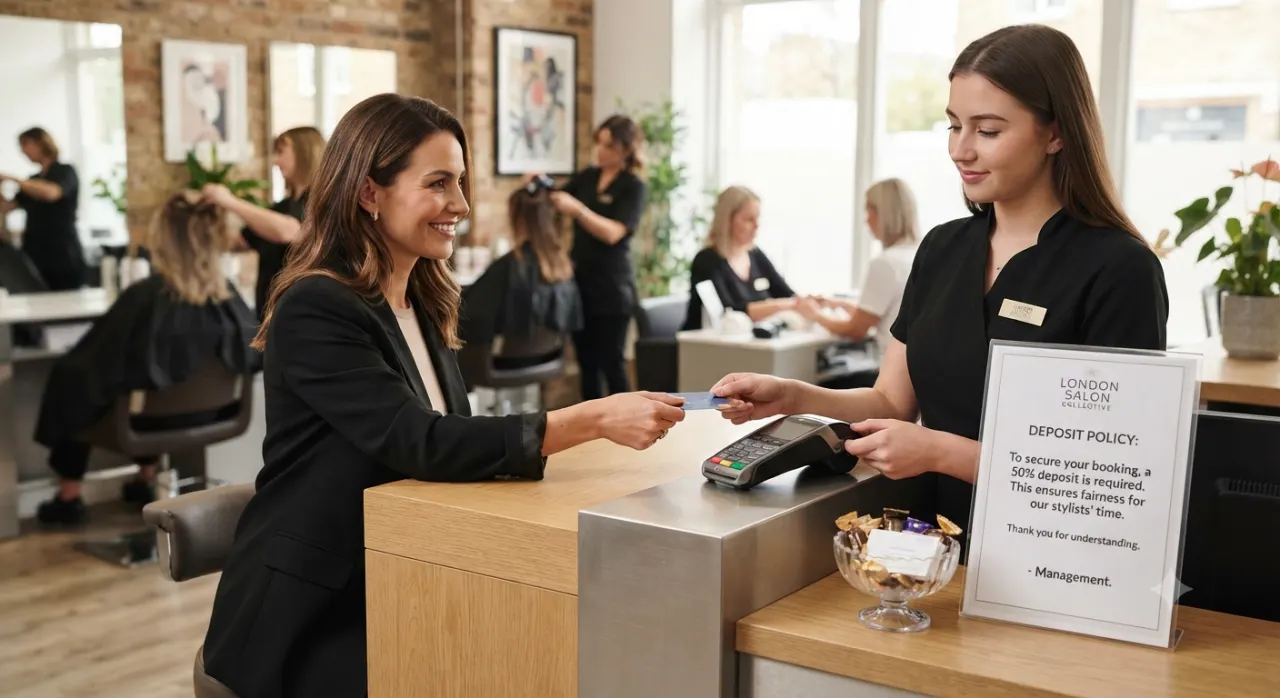
If it feels like every salon, tech and clinic suddenly wants £10–£30 upfront before they'll hold you a slot — you're not imagining it. Deposits have gone from an occasional big-ticket precaution to near-standard across UK beauty in just a few years. Clients grumble about it in forums; professionals swear by it in theirs. What's missing is anyone explaining it to both sides at once — including the part where UK law draws an actual line on what "non-refundable" can mean. So here's that piece.
Why this happened (the maths clients don't see)
A no-show doesn't cost a salon "a bit of admin" — it costs the entire slot. A missed full-morning colour appointment or a two-hour lash set is revenue that cannot be re-sold at 20 minutes' notice, while the rent, products and the professional's time were all committed anyway. For a self-employed tech doing five or six appointments a day, two no-shows a week can be the difference between a sustainable business and quietly going under. Deposits didn't spread because the industry got greedy; they spread because booking became effortless — a two-tap Instagram DM — while cancelling became equally effortless, and someone had to carry the cost of that gap. The deposit simply moved a share of the risk to the person creating it.
What a fair deposit setup looks like
Across the UK industry, the emerging standard looks something like this: a deposit of roughly 20–50% (or a flat £10–£30 for smaller treatments) that comes off your final bill, a cancellation window of 24–48 hours within which the deposit transfers to your rescheduled appointment, and forfeiture only for late cancellations and no-shows. Larger commitments — wedding makeup for a bridal party, a course of aesthetic treatments, a full head of colour on a Saturday — reasonably carry larger deposits, because the potential loss is larger. If the setup you're offered looks broadly like that, it's not the salon being difficult; it's the current normal.
The part clients should actually know: "non-refundable" has legal limits
Here's what rarely makes it into salon T&Cs discussions. Under UK consumer law, deposit and cancellation terms have to be fair, transparent and proportionate — a business is broadly entitled to keep enough to cover its genuine loss from your cancellation, not to pocket money regardless of circumstances. A blanket "non-refundable under all circumstances" clause, applied to a cancellation made weeks before the appointment when the slot can easily be refilled, sits on shaky legal ground — and consumer forums are full of people who've successfully pushed back on exactly that. Equally important: the policy only binds you if it was clearly communicated before you booked. A cancellation fee announced after the fact isn't a policy, it's a hope.
None of which means fighting every deposit — it means the reasonable questions are: what's the cancellation window, does the deposit transfer if I reschedule in time, and where was this stated when I booked? A professional with a fair policy answers those happily.
For the professionals reading: what actually works
The consensus from those who've implemented deposits well comes down to a few points. State the policy everywhere the client books — a checkbox at booking beats a laminated sign at the till, and a saved record beats both if there's ever a dispute. Take the deposit through your booking system rather than loose bank transfers, so there's a paper trail. Build in discretion: waiving the fee for a longstanding client with a genuine emergency costs you one slot and buys years of loyalty, while rigidly charging them costs you the client. And for repeat offenders, the quiet industry-standard escalation — future bookings only with a full upfront payment — filters the problem without a confrontation. The goal isn't punishing anyone; it's making the person who created the empty slot share its cost.
The bottom line
Deposits are the price of frictionless booking, and they're not going anywhere. For clients: a deposit that comes off your bill, transfers on timely rescheduling, and was disclosed upfront is fair — and blanket "non-refundable no matter what" terms are worth questioning, politely and with UK consumer law on your side. For professionals: transparency and a paper trail make the policy enforceable, and a little human discretion is what keeps it from costing you the clients it was meant to protect. Both sides, in the end, want the same thing — the appointment actually happening.
Find verified beauty professionals near you in our directory, or compare current UK treatment prices on our Beauty Price Index.
Choice Community
0 Comments
Join the conversation.
Log in to comment
No comments yet. Be the first to share your thoughts.
More from General Chat


Ads
Ads