Ads
Nobody Checks If Your Beauty Therapist Is Qualified — Not Even the Booking App
 Roylina Team
Gold · 4,110 lifetime points
Verified UK Pro — qualified & insured
Premium Lovers account
Premium Gold account
1 month ago
91
4 min
Roylina Team
Gold · 4,110 lifetime points
Verified UK Pro — qualified & insured
Premium Lovers account
Premium Gold account
1 month ago
91
4 min
Also Read:
Added up what I spend on beauty in a year and I've been sat here in silence for ten minutes
Here's something most people assume is handled and isn't: there is no national licensing system for most beauty treatments in the UK. Unlike a doctor, a dentist or an electrician, someone can complete a weekend course — or none at all — and start taking clients tomorrow. Some local councils require licences for specific treatments, particularly in London, but it's patchy and treatment-specific rather than a national standard.
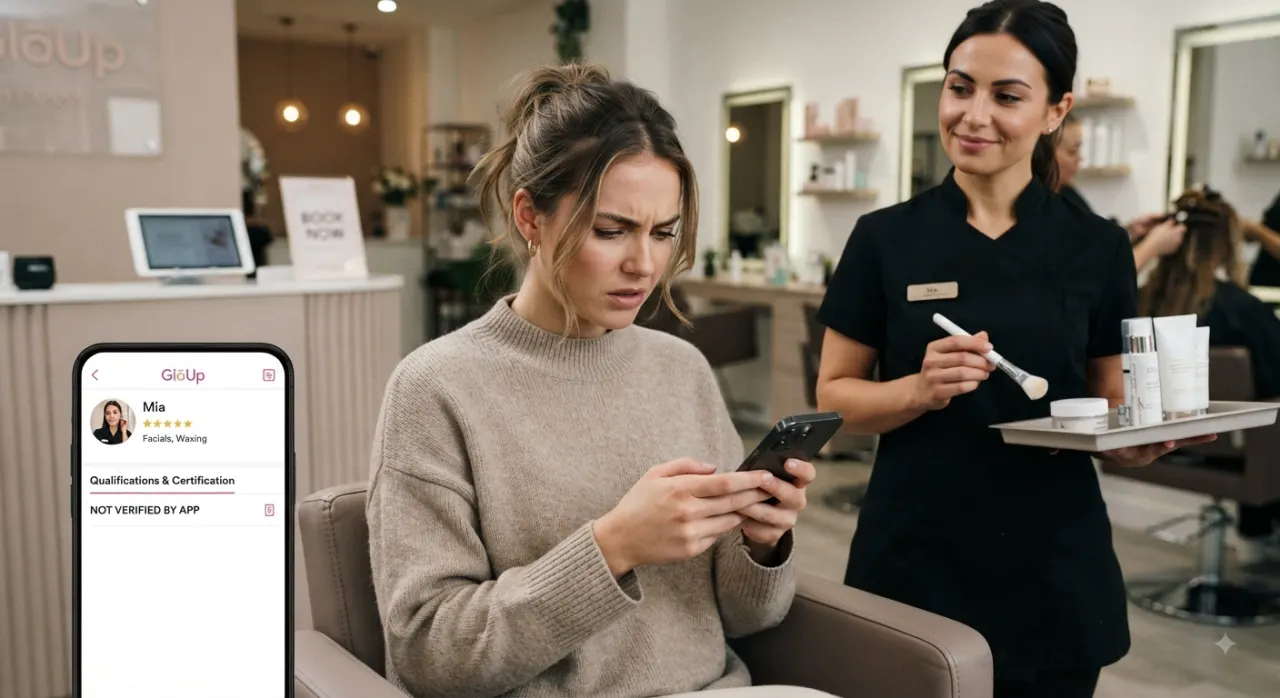
And the assumption that fills that gap for most people — that the booking app has checked — is also wrong. Industry figures have been flagging for years that consumers wrongly assume appointment platforms vet the businesses listed on them. Most don't. A listing means someone signed up and can take payments; it isn't a credential.
None of which means the industry is full of chancers. The vast majority of UK professionals are properly trained, insured and excellent at their jobs. It just means the verification is your job, and nobody tells you that. So here's what actually works.
Check 1: Insurance is the useful proxy
This is the single most efficient question, because of how UK salon insurance works. To hold a policy, a professional must have a qualification relevant to each treatment they perform, issued by a school, college or accredited training company, and accredited by a UK professional body such as BABTAC or HABIA.
Which means "are you insured for this treatment?" quietly asks about qualifications too. And the treatment-specific part matters: insurers require separate accredited training per method — someone insured for waxing isn't automatically covered for lash extensions, and hair extension cover typically requires being a qualified hairdresser and having done an accredited course for that specific extension method.
A professional with proper cover answers this instantly and without offence. Hesitation, vagueness, or "I've been doing this for years" as a substitute answer tells you what you need.
Check 2: Ask what qualification, not whether they're qualified
"Are you qualified?" gets a yes from everyone. "What qualification do you hold for this treatment, and who accredited it?" gets a specific answer or an evasion. Look for named accrediting bodies (BABTAC, HABIA, VTCT, City & Guilds) rather than a brand's own weekend certificate — product training is genuine and useful, but it isn't the same as an accredited qualification.
This matters most for the treatments where things can genuinely go wrong: anything involving needles, chemicals, heat, or the eye area.
Check 3: What happens before they touch you
Process is a better signal than paperwork, because it's visible. A properly trained professional does a consultation before a first treatment, requires a patch test where one is needed, asks about medications and previous reactions, and keeps records. Someone offering to skip any of that "just this once" isn't doing you a favour — they may be operating outside their insurance for that appointment, which becomes your problem if anything goes wrong.
Check 4: Healed results, not fresh photos
Every set looks good in the chair. The professionals worth booking show results at two, three, four weeks — or before-and-afters on hair or skin similar to yours. Reviews mentioning how long something lasted are worth ten reviews saying "gorgeous!". For semi-permanent work like microblading, healed photos are close to non-negotiable, because fresh pigment and healed pigment look nothing alike.
The aesthetics exception
For injectables the stakes and the rules are different, and here you can verify properly: practitioners should be registered with the GMC, GDC or NMC, and those registers are searchable online. Professional standards in this area are moving toward the Joint Council for Cosmetic Practitioners' risk-based framework, which classifies higher-risk procedures as requiring qualified medical professionals. Our guide to lip filler costs covers the specific questions worth asking before any injectable, including the one about emergency medication.
What this looks like in practice
You don't need to interrogate anyone. In practice it's one message before booking:
"Hi — before I book, could you let me know what qualification you hold for [treatment] and whether you're insured for it? Also happy to do a patch test if one's needed."
Any professional running a proper business answers that in a sentence and thinks better of you for asking. The response itself is the test.
The bottom line
No national licensing, no platform verification — the checking is genuinely down to you, and most people don't know that. The good news is it takes one message: ask about insurance (which implies accredited qualification), ask what that qualification actually is, watch whether consultation and patch testing happen properly, and judge portfolios on healed results. That's it. The professionals worth your money have nothing to hide, and asking costs you nothing but thirty seconds.
Every professional in the Roylina directory is verified before listing. Compare current UK treatment prices on our Beauty Price Index.
Choice Community
0 Comments
Join the conversation.
Log in to comment
No comments yet. Be the first to share your thoughts.