Ads

☀️
Summer is here! Holiday-ready nails, lashes and glow — share your looks.
Salmon DNA Skincare Is Everywhere — But Most of What You've Read Doesn't Apply in the UK
 Roylina Team
Silver · 2,350 lifetime points
Verified UK Pro — qualified & insured
Premium Lovers account
Premium Gold account
1 hour ago
4
4 min
Roylina Team
Silver · 2,350 lifetime points
Verified UK Pro — qualified & insured
Premium Lovers account
Premium Gold account
1 hour ago
4
4 min
Ads


If you've been anywhere near skincare content this year, you've met PDRN — the K-beauty ingredient better known by its unforgettable nickname, salmon sperm skincare. It's in serums, facials, and injectable treatments, influencers are flying to Seoul for it, and it's one of the most searched skincare terms of 2026. But here's what almost nobody points out: most of the articles you'll find about it are American — and on the injectable side, the US and UK situations are completely different. So here's the UK-relevant version.
What PDRN actually is (past the headline)
PDRN stands for polydeoxyribonucleotide — purified DNA fragments, most commonly derived from salmon or trout, that happen to be structurally very similar to human DNA. That similarity is the whole point: the skin recognises the fragments and uses them as raw material and repair signals, calming inflammation and nudging fibroblasts (your collagen-producing cells) into action. Before it was a beauty trend, PDRN spent years in genuine medical use for wound healing, burns and post-surgical recovery — which is more of a scientific pedigree than most viral ingredients arrive with.
Where it started as a trend: South Korea, where injectable versions (the brand Rejuran most famously) became a staple "skin booster" treatment for texture, elasticity and that much-chased glass-skin finish.
The part US articles get wrong for UK readers
Read American coverage and you'll hit the same line repeatedly: injectable PDRN isn't FDA-approved, so stick to creams. True — in America. In the UK, polynucleotide injectable treatments are available and have become one of the fastest-growing categories in aesthetic clinics, offered under brand names you may have seen like Plinest and Nucleofill. They sit in the same family as skin boosters — not fillers (they don't add volume), not anti-wrinkle injections (they don't touch muscles), but regenerative treatments aimed at skin quality itself: hydration, elasticity, texture, and particularly the under-eye area, where they've become a popular alternative for people told they're not good candidates for tear-trough filler.
If that "improves the skin rather than adding volume" idea sounds familiar, it's the same category logic as Profhilo — our guide to Profhilo vs dermal fillers explains that distinction, and polynucleotides are increasingly the third name in that conversation at UK clinics.
What to realistically expect
The honest read of the evidence: PDRN's strongest science is in healing and repair — clinical studies consistently show faster recovery after procedures like laser and peels. For general anti-ageing, results are real but gradual: injectable courses typically run 3–4 sessions, with collagen remodelling continuing for months afterwards; topical versions show more modest texture improvements over 8–12 weeks of consistent use. Nobody's skin transforms overnight, and any clinic or product promising that is selling the nickname, not the ingredient.
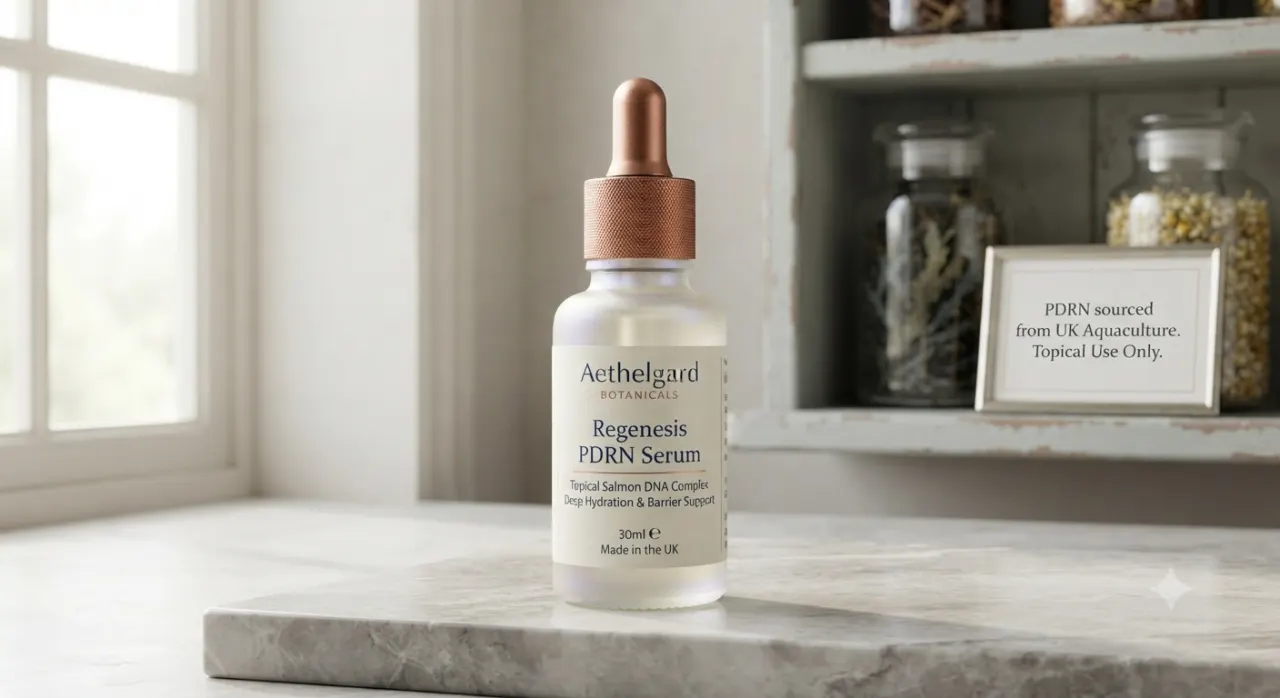
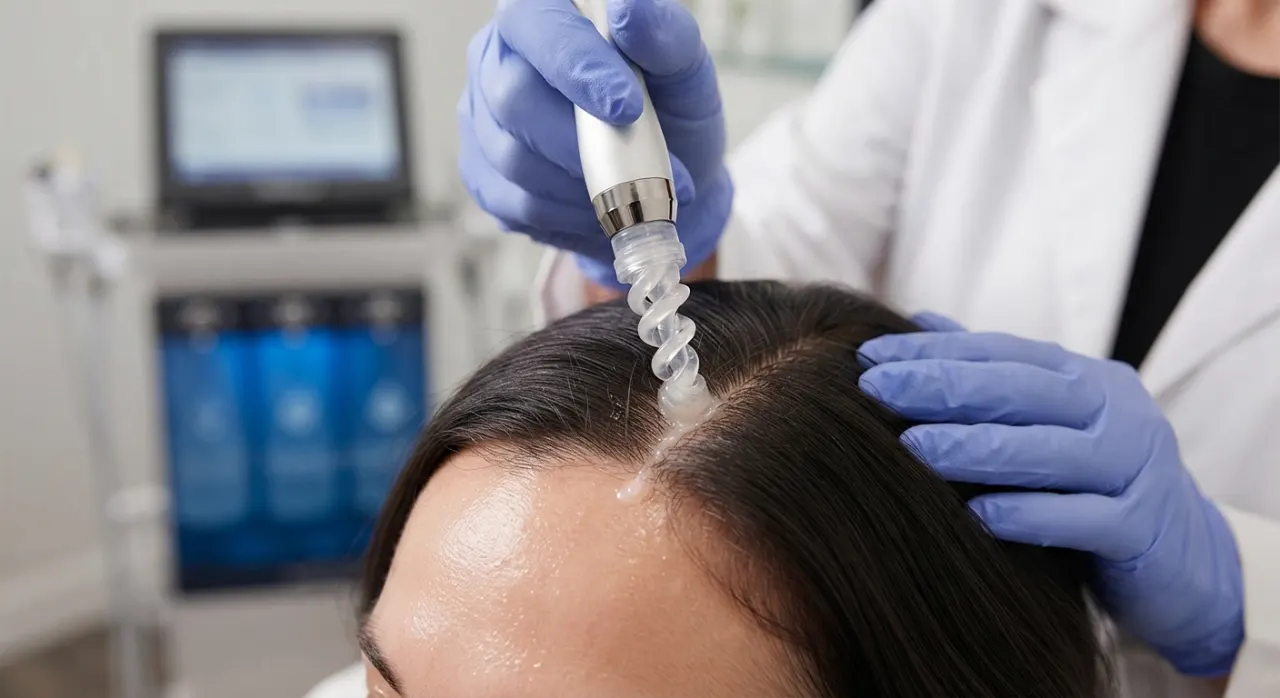
Worth knowing on the topical side: a serum can't replicate an injectable's depth. Creams and ampoules are a reasonable, gentle addition — particularly for barrier support if you use retinoids or exfoliants — but the dramatic before-and-afters circulating online are almost always from in-clinic treatments, often PDRN paired with microneedling, which uses the micro-channels to get the ingredient where it can actually work.
If you're considering the injectable route in the UK
The same rules apply as any injectable: this belongs with a qualified medical practitioner, not a bargain deal. Ask which specific product they use, check their registration, and expect a proper consultation covering whether polynucleotides suit your concern at all — for volume loss, filler remains the right tool; for muscle-movement lines, anti-wrinkle injections; polynucleotides are specifically for skin quality. A practitioner who frames it as a cure-all is a red flag. Fish allergies are also worth raising at consultation, given the source material.
The bottom line
PDRN is that rare trend ingredient with genuine science underneath the silly nickname — strongest for repair and skin quality, gradual rather than dramatic, and best delivered professionally rather than hoped for from a serum. And if you're in the UK, ignore the American "injectables aren't approved" framing: they're here, they're growing fast, and the real question isn't availability — it's finding a properly qualified practitioner and going in with realistic expectations.
Find a verified aesthetics practitioner or skincare specialist near you in our directory, or browse current UK treatment pricing on our Beauty Price Index.
Choice Community
0 Comments
Join the conversation.
Log in to comment
No comments yet. Be the first to share your thoughts.
More from General Chat

Ads


Ads