Ads
☀️
Summer is here! Holiday-ready nails, lashes and glow — share your looks.
The Male Beauty Boom Is Real — Here's What UK Men Are Actually Booking (and What First-Timers Should Know)
 Roylina Team
Gold · 2,658 lifetime points
Verified UK Pro — qualified & insured
Premium Lovers account
Premium Gold account
3 hours ago
37
4 min
Roylina Team
Gold · 2,658 lifetime points
Verified UK Pro — qualified & insured
Premium Lovers account
Premium Gold account
3 hours ago
37
4 min
Ads
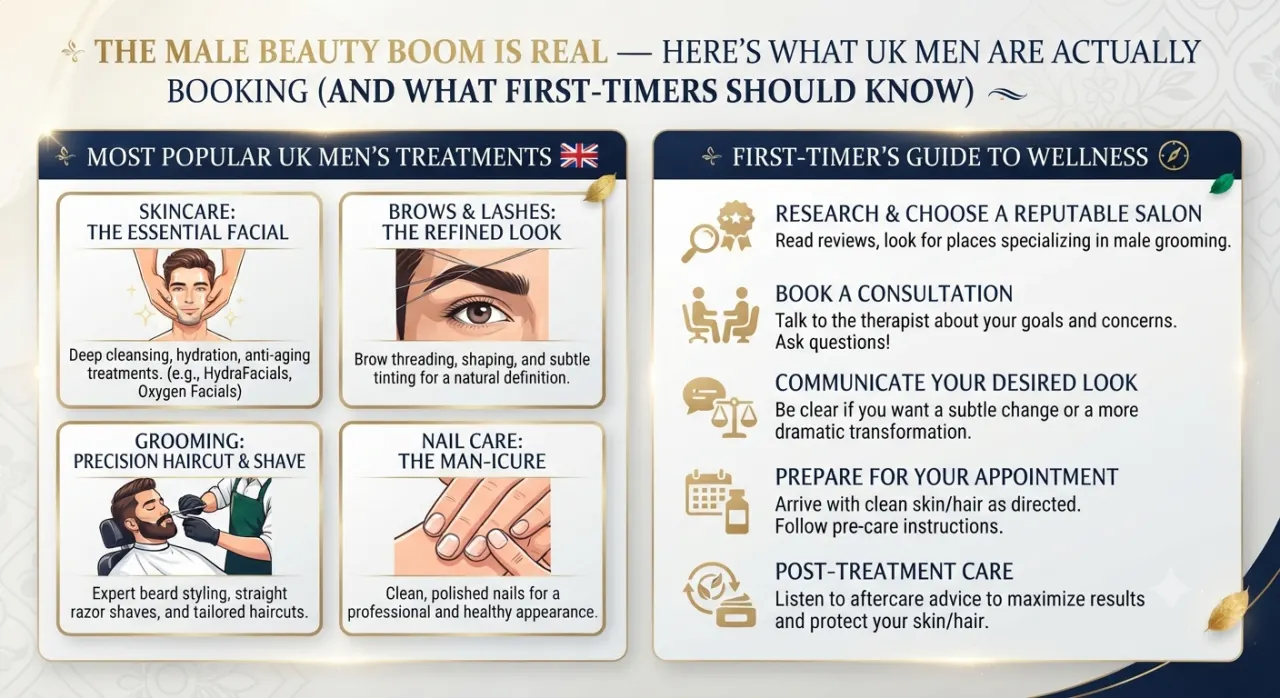
Something has genuinely shifted in who's sitting in the salon chair. Booking-platform data shows searches for male anti-wrinkle treatments up 100% year-on-year, with actual appointments made by men jumping 76% across Europe — including repeat bookings, which is the telling part: this isn't curiosity, it's routine. And it's being driven not by older men chasing lost youth, but largely by 26–34 year olds treating aesthetics the way they treat the gym. Here's what's actually going on, and the practical stuff worth knowing if you're a man quietly considering a first appointment.
What's driving it (it's less mysterious than the headlines suggest)
Three forces come up consistently. First, the generational one: men now in their late twenties and thirties grew up with skincare, SPF and grooming as normal — an anti-wrinkle appointment reads to them as an extension of the same logic, not a taboo. Second, the camera effect: video calls, dating apps and social feeds mean men see their own faces on screen constantly, and "looking tired on camera" has become a genuine, practical complaint. Third, the workplace calculation: men in their forties and fifties competing alongside colleagues fifteen years younger have the same pragmatic reasons women have quietly acted on for decades. Stigma hasn't vanished — plenty of male clients still don't discuss it — but it's stopped being a barrier to booking.
What men are actually booking
Anti-wrinkle injections lead by a distance — typically the frown lines and forehead, which tend to develop earlier in men due to stronger facial muscles. But the fuller picture is broader: laser hair removal (backs, shoulders, necklines), brow tidying and shaping, regular facials and skin treatments like HydraFacials, and hair-loss related treatments, one of the fastest-growing categories anywhere in aesthetics. The common thread across all of it: subtle. Practitioners consistently report that male clients aren't asking for transformation — the brief is almost always "less tired," with normal expression and masculine features intact.
The practical things first-timers aren't told
- Men usually need higher doses — and often pay more. Stronger facial muscles mean more product to get the same result, which is why many UK clinics charge men roughly £20 or so extra per area. It's a legitimate dosing difference, not a surcharge — but worth knowing when comparing quotes. (Our guide to what counts as "one area" explains the pricing structure that catches most first-timers out.)
- Ask to see male before-and-afters specifically. Male brow position and facial balance are treated differently — a practitioner whose portfolio is entirely female faces isn't automatically the wrong choice, but one with demonstrable male results is a safer one. The best sign of all: a practitioner willing to talk you out of treatments you don't need.
- The same red flags apply regardless of gender. Medical qualifications you can verify, a named product, a proper consultation, and emergency protocols in place. Suspiciously cheap injectables are exactly as much of a warning sign for men as for anyone else.
- Results aren't instant. Anti-wrinkle effects appear over 3–5 days and settle fully at about two weeks — useful to know if you're timing a first treatment around an event or an important stretch at work.
Worth knowing for the professionals reading
For the techs, therapists and clinic owners in our community: this is a client segment growing faster than the industry average, and the UK men's grooming market is projected to pass £1.1 billion this year. The clinics capturing it aren't necessarily building "man caves" — the recurring themes are simpler: male results in the portfolio, straightforward service descriptions without heavily feminised branding, and discretion as a default. A meaningful share of male clients arrive having researched thoroughly but told nobody — the booking experience that doesn't make a thing of it wins the repeat visit.
The bottom line
The male beauty boom isn't hype — the booking data is unambiguous, and it's being driven by men treating this as maintenance rather than makeover. If you're considering a first appointment: expect to pay slightly more per area than the listed price if it's dosed properly, choose a practitioner with male work in their portfolio, and apply the same qualification checks everyone should. The chair doesn't care who's sitting in it — the standards for who's holding the needle shouldn't either.
Find verified practitioners near you in our directory, or compare current UK treatment prices on our Beauty Price Index.
Choice Community
0 Comments
Join the conversation.
Log in to comment
No comments yet. Be the first to share your thoughts.
More from General Chat
Ads
Ads