Nail Infills Explained: How Often, How Much, and When You Actually Need a Full Set
5 min read · Updated 2 Aug 2026
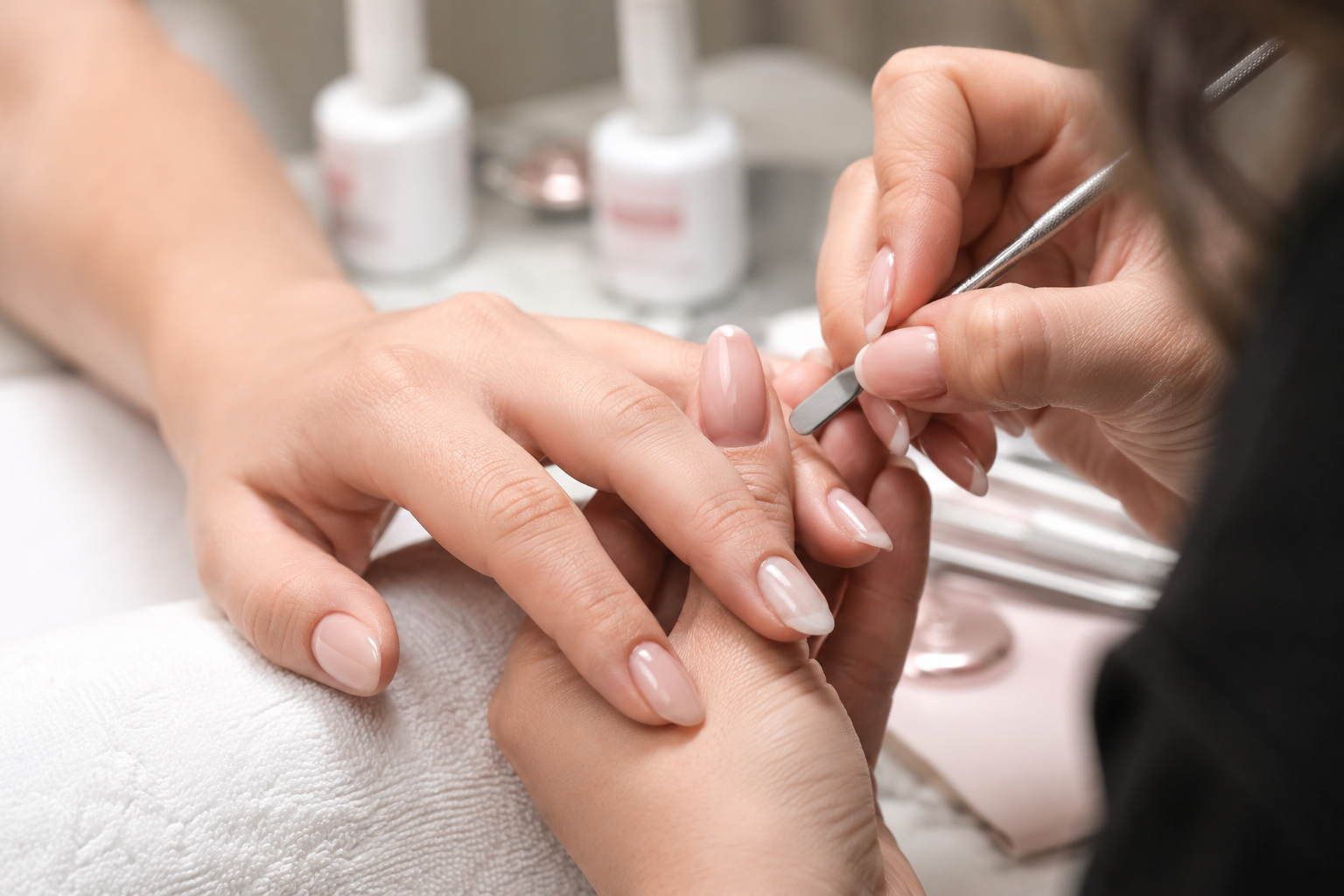
If you've ever sat down in the chair and your nail tech asked "is this an infill or do you want a full set?" and you weren't entirely sure how to answer — you're not alone. It's one of those things everyone with acrylics, BIAB or gel extensions ends up needing regularly, but almost nobody explains properly the first time around.
So here's the actual breakdown: what an infill is, how it's different from a rebalance and a full set, how often you genuinely need one, and what it should cost you.
What an infill actually is
Your natural nail keeps growing underneath your acrylic, BIAB or gel extension whether you like it or not. After two to three weeks, you'll start to see a gap near the cuticle where the natural nail has grown out and the product hasn't moved with it. An infill is the maintenance appointment that fixes that gap.
Your tech files back the area where the old product meets the new growth, cleans it up, and applies fresh product to blend the two together. The rest of your existing set stays put — you're not starting from scratch, which is exactly why an infill is quicker and cheaper than a full new set.
Infill vs rebalance vs full set: what's the actual difference
These three terms get used loosely and it varies a bit by salon, but here's the distinction that actually matters:
- Infill — you've left it 2–3 weeks, the structure of your nails is still solid, and it's mostly just filling the regrowth gap and refreshing colour.
- Rebalance — you've left it 4+ weeks. The "apex" (the strongest point of the nail) has shifted along with your natural nail growth and needs to be restructured, not just topped up. This takes longer and is more involved than a standard infill.
- Full set / new set — the existing product is removed completely and you start again. This is usually needed if there's significant damage, several nails have lifted or broken, or it's been too long since your last appointment to safely infill.
If you're someone who tends to leave it 5+ weeks between appointments, it's worth telling your tech that upfront — booking it as an infill when it actually needs a rebalance just means a longer chair time than either of you planned for.
How often do you actually need one?
For most acrylic, BIAB and hard gel extensions, every 2–3 weeks is the realistic window before the regrowth gap starts affecting how the nail looks and, more importantly, how secure it is. Pushing past 4 weeks regularly is when you start tipping from "infill" territory into "rebalance" territory, and pushing well beyond that increases the risk of lifting, cracking, or product trapping moisture against the natural nail.
If you're wearing softer gel polish without an extension, you've got a bit more flexibility — but the same growth logic applies, just with slightly less structural risk.
What infills cost in the UK right now
Based on real pricing data submitted by salons and clients across the UK:
- Acrylic infill: around £49 on average
- Acrylic full set: around £49.17 on average
- BIAB (full application): around £44.63 on average
- Gel manicure: around £46.29 on average
Notice how close the infill and full set prices are in the averages above — that gap varies a lot more by individual salon than the headline numbers suggest, so it's always worth asking your specific salon for their infill rate rather than assuming it'll be dramatically cheaper than a fresh set. For a breakdown by treatment and by city rather than the UK-wide average, our price index is the place to check, and the pricing calculator can help you work out a realistic monthly cost once you factor in infills every few weeks rather than just the one-off price.
What happens if you skip infills
It's tempting to stretch it out another week or two when life gets busy, but there's a real reason techs push back on leaving it too long. Once product lifts away from the natural nail, it creates a gap where moisture and bacteria can get trapped underneath — which is when you start hearing about infections rather than just "my nails look a bit grown out." Cracks and stress points also build up around the area where the apex has shifted, and that's usually where breaks happen.
None of this means you need to panic if you're a few days late to your usual slot. It's the repeated pattern of going 5, 6, 7+ weeks that causes problems, not the occasional one-off delay.
The bottom line
Book an infill every 2–3 weeks if you want to keep extensions looking fresh and structurally sound. If you know you're going to be closer to the 4-week mark, mention it when you book so your tech can plan for a rebalance instead. And if it's genuinely been a couple of months, don't be surprised — or insulted — if a full new set is what's actually recommended. It's not an upsell, it's usually just what the nail needs at that point.
If you're still working out which treatment is right for you in the first place, our guide to BIAB vs gel vs acrylic vs dip powder covers how each one compares in terms of strength, lasting time and cost.
Prices shown are UK averages based on data submitted to our Beauty Price Index and will vary by salon and region. Have a price to add? You can submit it here to help keep the index accurate.