Ads
The UK Is Finally Regulating Injectables — But Not Yet. Here's What's Actually Law Right Now
 Roylina Team
Gold · 4,110 lifetime points
Verified UK Pro — qualified & insured
Premium Lovers account
Premium Gold account
1 month ago
102
5 min
Roylina Team
Gold · 4,110 lifetime points
Verified UK Pro — qualified & insured
Premium Lovers account
Premium Gold account
1 month ago
102
5 min
Also Read:
Added up what I spend on beauty in a year and I've been sat here in silence for ten minutes
For years the UK has carried an uncomfortable contradiction: someone with no medical background and no mandatory qualification can legally inject filler into your face, in premises with no licence at all — while the same treatment sits at the sharp end of patient-safety concern. That's finally changing. But it's changing slowly, unevenly across the four nations, and almost everything written about it is aimed at practitioners rather than the people actually sitting in the chair.
So here's the client's version — including the part where some of the industry's own coverage gets it wrong.
First, the confusion worth clearing up
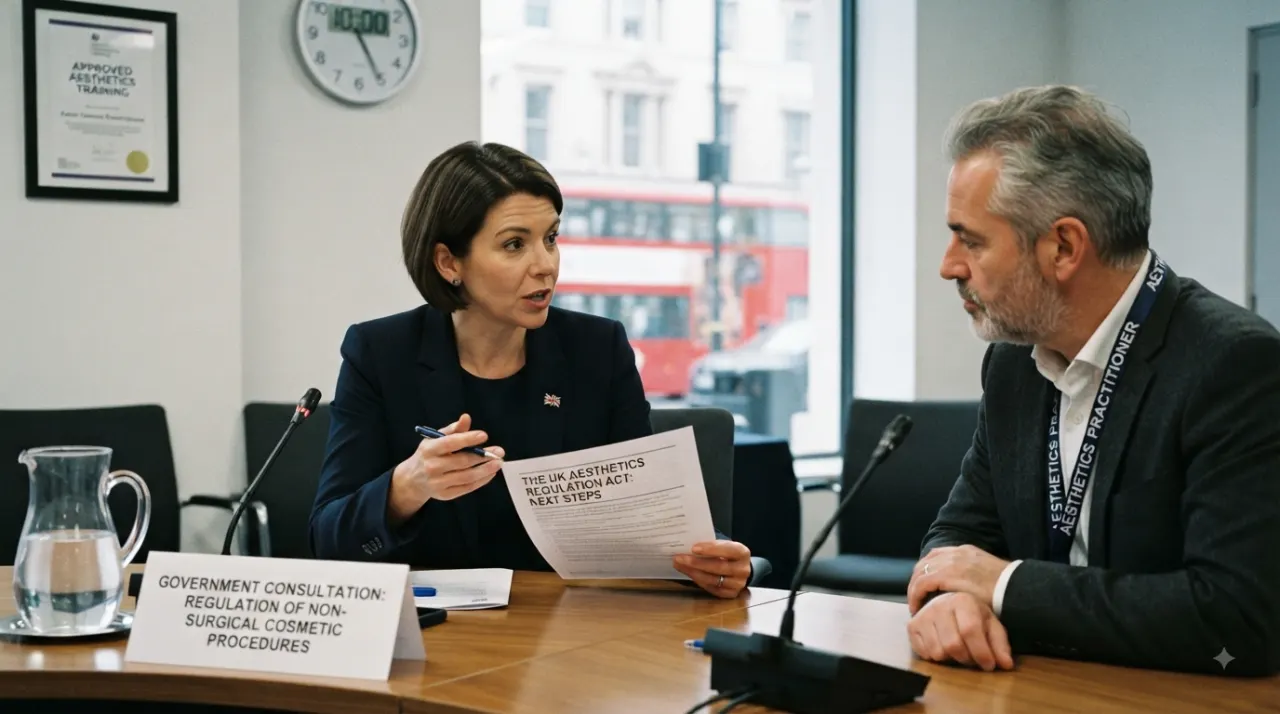
Read around this topic and you'll find sources confidently stating the licensing scheme is "fully operational in 2026." Others, updated more recently, say it's confirmed in principle but not yet in force. The more careful sources are right: as of mid-2026, England has committed to the scheme and published the model, but the precise procedures, qualification standards and start date are still going through consultation and parliamentary scrutiny.
That matters to you practically. If a clinic tells you they're "fully licensed under the new scheme," that isn't yet a thing in England — and it's worth knowing rather than being reassured by it.
The Red / Amber / Green model
The framework confirmed by the Government's August 2025 consultation response (which drew nearly 12,000 responses) sorts procedures into three tiers by clinical risk. Once in force, this is genuinely useful as a client-side risk map:
- Green — lower risk, such as microneedling and chemical peels. Will require a local-authority licence.
- Amber — medium risk, including botulinum toxin (anti-wrinkle injections) and dermal fillers. Will require a local-authority licence plus oversight from a named regulated healthcare professional.
- Red — highest risk. Restricted to qualified healthcare professionals working in CQC-registered premises.
The Amber tier is the significant one. It doesn't ban non-medics from injecting outright — a point several professional bodies have pushed back on — but it does put a named healthcare professional in the chain of accountability.
The four nations are moving at different speeds
This surprises people. Regulation here isn't UK-wide:
- England — scheme confirmed, not yet switched on.
- Scotland — has moved faster, with its own Non-surgical Cosmetic Procedures legislation, making it one of the first UK nations with detailed statutory control.
- Wales — became the first UK nation to license "special procedures."
- Northern Ireland — separate again.
Practically: where you're treated changes what protections currently apply to you.
What IS already law today
Here's the part that gets lost in "regulation is coming" coverage — several things are already enforceable and worth knowing:
- Under-18s. It is a criminal offence in England to administer botulinum toxin or cosmetic fillers by injection to anyone under 18. Practitioners must verify age, and there is no parental consent exception. If a clinic offers to treat a 17-year-old with a parent's permission, that's not a grey area — it's an offence.
- Prescribing rules. Botulinum toxin is a prescription-only medicine. It must be prescribed by an appropriately qualified prescriber following a proper consultation — remote prescribing without seeing the patient has been tightened.
- Advertising rules. UK advertising standards prohibit promoting prescription-only medicines to the public, which is why reputable clinics say "anti-wrinkle injections" rather than brand names. A clinic advertising "Botox deals" is already breaching the rules that govern it — a useful signal, as our guide to anti-wrinkle injections vs fillers explains.
- Insurance and qualification requirements already apply in practice, even without licensing — covered in our post on how to actually check a practitioner's credentials.
What this means for you before the scheme lands
The gap between "announced" and "in force" is likely to run into 2027, and that's precisely the window where the checks are still on you. The four questions that matter haven't changed:
- What's your registration? GMC, GDC or NMC numbers are searchable online. Verify rather than trust.
- Who prescribed the product, and did they see me? For anything prescription-only, this is a legal question, not a rude one.
- Do you carry hyaluronidase? The emergency medication that dissolves hyaluronic acid filler if a vascular occlusion occurs. Covered properly in our lip filler guide.
- What happens if something goes wrong? A clear answer about complication management — and indemnity insurance — separates a clinic from a chancer.
Is the scheme actually going to fix it?
Honestly, opinion within the industry is split, and it's worth knowing that rather than being sold a clean narrative. Some practitioners have publicly called the timeline a delay tactic — the Health and Care Act granted these powers back in 2022, and implementation is still years out. Others note tension between public protection and the sector's economic weight, estimated at over £20 billion annually.
The most likely realistic outcome: a meaningful raising of the floor, rather than the "only doctors may inject" outcome some campaigners wanted. Better than now; short of what the strongest advocates argued for.
The bottom line
A Red/Amber/Green licensing scheme is confirmed for England but not yet in force — treat any clinic claiming otherwise with mild scepticism. Scotland and Wales are ahead. Meanwhile, plenty is already law: no injectables for under-18s under any circumstances, proper prescribing, and advertising restrictions that a "Botox special" quietly ignores. Until the scheme lands, the verification is still yours to do — and the four questions above take about a minute.
Find a verified, qualified aesthetics practitioner near you in our directory, or compare current UK treatment prices on our Beauty Price Index.
Choice Community
0 Comments
Join the conversation.
Log in to comment
No comments yet. Be the first to share your thoughts.